Sunday, March 8, 2015

South Sudan peace talks collapse - Yahoo News


AFP


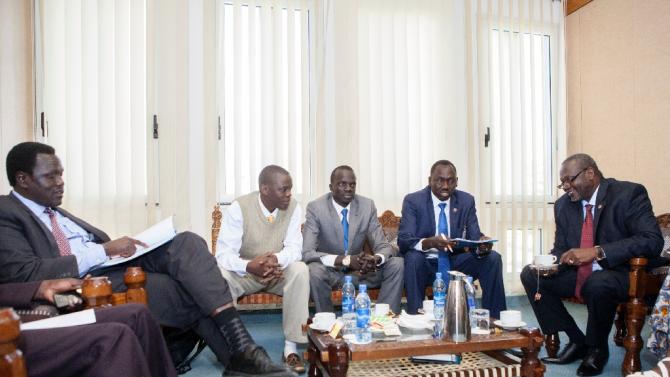
South Sudan rebel chief and former vice-president Riek Machar (R) speaks with his delegation prior to a meeting on March 3, 2015 in Addis Ababa
.

View gallery


  • .
  • .
Addis Ababa (AFP) - South Sudan's warring leaders failed to reach a deal to end more than a year of civil war, mediators said, with the latest collapse in peace talks paving the way for possible sanctions.
Ethiopia's prime minister said South Sudan's President Salva Kiir and rebel leader Riek Machar missed a deadline to reach a peace agreement by midnight Thursday, and that further talks on Friday "did not produce the necessary breakthrough."
"This is unacceptable, both morally and politically," Hailemariam Desalegn said in the statement issued by the east African regional bloc IGAD, which has been trying to mediate a peace deal.
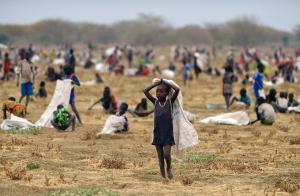
Hailemariam also gave IGAD's harshest criticism yet of Kiir and his former deputy Machar, whose personal feud has exploded into ethnic massacres, gang rapes and the forced displacement of civilians, pushing the country to the brink of famine.
"Continuing a war flagrantly disregards the interests of you, the people," he said, addressing the people of South Sudan, whose country only gained independence from Khartoum in 2011 after a long, bitter war.
"It is an abdication of the most sacred duty leaders have to you, their people: to deliver peace, prosperity and stability," the Ethiopian premier said of Kiir and Machar, both of who have been implicated in atrocities.
"I asked them to be courageous in offering compromises and alternatives, rather than only reiterating old positions.... Unfortunately, as the missed deadline shows, our pleas have not been heeded."
The US condemned on Friday a lack of "political leadership" to resolve South Sudan's civil war.
US State Department spokeswoman Marie Harf said Kiir and Machar had "again failed the people of South Sudan by refusing to make the compromises necessary for peace".
"We strongly condemn the lack of political leadership to resolve this man-made conflict that has exacted a terrible cost over the past nearly 15 months," Harf said in a statement.
UN Secretary General Ban Ki-moon said he was "profoundly disappointed" with the failure to reach a peace deal.

South Sudan's civil war started in December 2013 when Kiir accused Machar, who had been sacked as vice president, of attempting a coup.
Ban said the leaders failed "to display statesmanship" but he nevertheless called "for the continuation of the negotiations."
More than two dozen armed groups -- including government soldiers and allied militia backed by Ugandan soldiers on one side, and a range of rebel factions on the other -- have been battling it out since.
Tens of thousands of people have died in the conflict, two million have been uprooted and 2.5 million are in desperate need of food aid.
- More robust approach -
In a bid to force a deal, the United Nations this week passed a resolution threatening sanctions against individuals deemed to be undermining peace efforts.
Possible targets include leaders or officials who obstruct peace talks, impede humanitarian aid deliveries, recruit child soldiers or attack UN peacekeepers.
Acknowledging IGAD's failure to broker peace, Hailemariam said the "peace process must be reinvigorated and reformed".
"We will assist the parties to make the compromises that have so far eluded them. We will use all influence at our disposal to convince those that remain intransigent," he said, alluding to mounting calls for sanctions and an arms embargo.
According to diplomats close to the peace process -- which has so far cost at least 20 million euros ($21.7 million) and earned the peace delegates scorn for drawing out their stays in luxury hotels -- IGAD could call in the African Union, the 54-member pan-African bloc, in a bid to find a more robust approach.
A draft AU report on the conflict obtained by AFP has recommended South Sudan be handed over to internationally-mandated caretakers and its warring leaders barred from politics.
Former Nigerian president Olusegun Obasanjo led an AU probe and submitted a final version of the report in January, but AU officials had shelved it -- fearing its publication might undermine IGAD's peace efforts.

Wednesday, March 4, 2015

U.N. Moves Closer to Sanctions in South Sudan Conflict - NYTimes.com

UNITED NATIONS — The United Nations Security Council on Tuesday unanimously adopted a resolution to impose sanctions on those who disrupt efforts to restore peace in South Sudan, but it stopped short of barring the warring factions from buying more arms.
The resolution passed as the rival factions faced a Thursday deadline for reaching a deal in peace talks in Ethiopia, and as South Sudan’s army, under mounting pressure, agreed to investigate allegations that a pro-government militia had abducted dozens of children.
Fighting between forces loyal to President Salva Kiir and rebels allied with his former vice president, Riek Machar, plunged South Sudan, the world’s youngest nation, into a civil war in December 2013 that has killed tens of thousands, displaced two million civilians and left a trail of rapes and executions.


The Council’s resolution does not immediately impose sanctions. Rather, it sets up a panel to identify people who are responsible for undermining the peace efforts, including by recruiting child soldiers and committing serious human rights abuses. It proposes travel bans and an asset freeze for those people, and it offers the possibility of an arms embargo further down the road.
The United States drafted the measure. China, which traditionally shies away from punitive measures like sanctions, voted in favor of it. China has significant oil investments in the country.
South Sudan’s ambassador to the United Nations, Francis Deng, criticized the timing of the measure, which he called “counterproductive” at a time when peace negotiations were underway. “What the president and government of South Sudan need is encouragement, not condemnation,” Mr. Deng said.
The Council measure passed just hours after the chief of South Sudan’s army announced an investigation into allegations that a pro-government militia had abducted dozens of schoolchildren. The United Nations Children’s Fund, or Unicef, initially reported that 89 children, some as young as 13, had been abducted from a village in Upper Nile State.
The agency later revised the figure and said hundreds might have been taken and forced to join a pro-government militia led by Johnson Oloni. It appealed to the government to gain their released.
In a statement Tuesday, Col. Philip Aguer, the spokesman for South Sudan’s army, known as the Sudanese People’s Liberation Army, said his forces were committed to being “child free” and would look into the allegations.
Unicef said it believed that more than 12,000 South Sudanese children had been recruited into armed groups since the conflict began.
Those who conscript children to fight could face targeted sanctions, according to the Council’s resolution. The American ambassador to the United Nations, Samantha Power, described the measure as a way to press the rival leaders to make a deal. Directing her remarks to the South Sudanese factions, she said, “You will be held to account now, as we urge you to compromise to reach an agreement, and later, when you are considering whether to follow through on its terms.”
The Chinese envoy, Liu Jieyi, called on the two sides to “stop fighting immediately.” Beijing has sent the first of what is to be a full infantry battalion for the United Nations peacekeeping mission in South Sudan.
The monitoring group Human Rights Watch said an arms embargo should have been included in the resolution. “Those who are responsible for serious human rights violations should now be named and slapped with a travel ban and asset freeze, and countries or corporations that arm them should be exposed,” said Philippe Bolopion, the group’s United Nations director.


Tuesday, February 24, 2015

ADDIS ABABA, Ethiopia: Mediator cites distress over South Sudan truce violation | World | SanLuisObispo

<div style="background-color: white; border: 0px; color: #333333; font-family: Arial, Geneva, sans-serif; font-size: 14px; line-height: 20px; margin-bottom: 20px; margin-top: 20px; max-width: 620px !important; outline: 0px; padding: 0px; vertical-align: baseline;">
 — The continuing violations of a South Sudan truce signed earlier this month are vexing mediators, an Ethiopian official said Monday as peace talks resumed on Monday amid reports of sporadic violence in the country.


A monitoring and evaluation team from the regional body, the Inter-Governmental Authority on Development, confirmed the violation of the agreement signed on Feb. 1 by South Sudan President Salva Kiir and rebel leader Riek Machar, Seyoum Mesfin of the regional group said at the opening of the latest round of negotiations between South Sudan's warring factions.
Both sides have accused each other of violating multiple agreements which have failed to end the violence which erupted in the world's newest nation in December 2013.
"I must repeat my distress and that of my colleagues over the violation of the cessation of hostilities agreement that has continued after the Feb. 1 agreement," Seyoum said.
Mediators are urging both sides to reach a decisive peace agreement by March 5.
The warring factions are also expected to reach an agreement on details of the arrangement to set up a transitional government by July 9.
"This is the final opportunity to bring peace to South Sudan. The whole world is watching and we must not fail," Seyoum said. "We must bring an end to the suffering that is still ongoing in South Sudan."


Read more here: http://www.sanluisobispo.com/2015/02/23/3503467/mediator-cites-distress-over-south.html#storylink=cpy

ADDIS ABABA, Ethiopia: Mediator cites distress over South Sudan truce violation | World | SanLuisObispo

<div style="background-color: white; border: 0px; color: #333333; font-family: Arial, Geneva, sans-serif; font-size: 14px; line-height: 20px; margin-bottom: 20px; margin-top: 20px; max-width: 620px !important; outline: 0px; padding: 0px; vertical-align: baseline;">
 — The continuing violations of a South Sudan truce signed earlier this month are vexing mediators, an Ethiopian official said Monday as peace talks resumed on Monday amid reports of sporadic violence in the country.


A monitoring and evaluation team from the regional body, the Inter-Governmental Authority on Development, confirmed the violation of the agreement signed on Feb. 1 by South Sudan President Salva Kiir and rebel leader Riek Machar, Seyoum Mesfin of the regional group said at the opening of the latest round of negotiations between South Sudan's warring factions.
Both sides have accused each other of violating multiple agreements which have failed to end the violence which erupted in the world's newest nation in December 2013.
"I must repeat my distress and that of my colleagues over the violation of the cessation of hostilities agreement that has continued after the Feb. 1 agreement," Seyoum said.
Mediators are urging both sides to reach a decisive peace agreement by March 5.
The warring factions are also expected to reach an agreement on details of the arrangement to set up a transitional government by July 9.
"This is the final opportunity to bring peace to South Sudan. The whole world is watching and we must not fail," Seyoum said. "We must bring an end to the suffering that is still ongoing in South Sudan."


Read more here: http://www.sanluisobispo.com/2015/02/23/3503467/mediator-cites-distress-over-south.html#storylink=cpy

Sunday, February 8, 2015

S. Sudan rebels welcome deployment of Ethiopian peacekeepers - Sudan Tribune: Plural news and views on Sudan

February 7, 2015 (ADDIS ABABA) – South Sudanese rebels led by former vice-president, Riek Machar have welcomed Ethiopia’s plan to deploy troops in South Sudan, indicating they prefer to see them under the banner of the UN Mission in South Sudan (UNMISS).
JPEG - 16.3 kb
UNMISS troops from India patrol the perimeters of a compound in South Sudan’s capital, Juba (AP)
Ethiopia on Thursday announced it will be sending 600 additional peacekeeping troops to Somalia, South Sudan and to Abyei, a disputed region claimed by both Sudan and South Sudan.
According to the Ethiopian International Peace-keeping Training Centre, three helicopter gunships would be sent to South Sudan on top of the unspecified number of a regional peacekeeping force to be deployed next March in the youngest nation.
Machar told Sudan Tribune on Saturday that the rebel group has no objections to the deployment of Ethiopian troops to South Sudan as peacekeepers.
However Machar pointed that the deployment of the Ethiopian forces would only be accepted if the troops would be under the United Nations mandate.
Otherwise “it would be another issue,” he said.
Ethiopian military officials were not available for comments Saturday.
Since last year Machar rejected the IGAD decision to deploy troops in the new nation pointing it would regionalise the internal conflict.
“If IGAD member states who mediate the peace talks want to interfere militarily in the conflict, we may rethink our participation in the talks,” he said in a statement to Sudan Tribune in March 2014.
Instead the former vice president, who is calling for the withdrawal of Ugandan troops supporting president Kiir, welcomed IGAD’s contribution to the UN peacekeepers, saying UNMISS has the full mandate to protect civilians in crisis of such kind.
Currently there are over 12,000 Ethiopian peacekeepers serving in Somalia, South Sudan, Darfur (in western Sudan) and in the disputed Abyei region.

Monday, February 2, 2015

Kiir and Riek should be in an Ethiopian jail, not getting another shot to misrule South Sudan | Mail & Guardian Africa


It is hard to see how, even if the gods of the River Nile were overseeing the peace deal, the two warriors can work together again.
Kiir (left in hat) and Machar (R) after signing a peace deal recently in Tanzania with President Jakaya Kikwete (C): BELOW troops from both sides have been accused of atrocities. (Photo AFP).
AFTER 13 months of fighting and six failed ceasefires, diplomats say the latest peace proposal to end the war in South Sudan will, well, return to the status quo that precipitated the carnage in the first place, AFP reported.
The latest peace proposal drafted in Addis Ababa by regional bloc Intergovernmental  Authority on Development (IGAD) leaves the reputedly whisky-loving Salva Kiir as president and re-installs flamboyant and fickle rebel leader Riek Machar as his deputy.
Machar was deputy president until July 2013 when his sacking soured the new nation’s politics, and led to a bloody ethnic-cleansing war that erupted five months later.
“More and more it’s moving towards an elite compromise, but at least that will stop the killing,” an Ethiopia-based diplomat aptly told AFP.
Regional and international peace efforts have repeatedly squeezed out promises of peace from Kiir and Machar, but each one has been broken within days, if not hours.
Hotel lounge politicians
In Addis Ababa, the warring parties were clearly not seen as serious; “Earning a reputation as slow talkers and hard drinkers, the South Sudanese delegations at the European Union-funded talks held in luxury hotels in Ethiopia have already cost at least $22 million,” according to diplomatic sources, AFP reported.
“Talks were first held at the plush Sheraton Hotel… delegates could choose from 11 restaurants and bars, bathe in a pool that plays music underwater, visit the spa or simply enjoy the indoor fountains, decorative ponds and mini-palm trees. Rooms cost around $300 a night.
As the bills piled up as fast as the bodies back home and progress proved glacial, the talks were moved to a nearby hotel where rooms are half the price. Delegates continue to claim a $250 per diem for attending”. Basically they were being bribed to bring peace to the country!
Heavy toll
The war in South Sudan has displaced at least 1.9 million people, and killed well over 10,000 – at the most conservative.  Some estimates put the dead at between 50,000 and 100,000 by November 2014.
Typifying the horrors of the violence and the targeting of rival ethnic groups, one report noted:
“Witnesses reported soldiers going door-to-door, as members of Mr Kiir’s Dinka tribe hunted down ethnic Nuer, the people of Mr Machar. At night, bodies were discreetly trucked out of the city and burned or buried, witnesses and human rights groups say.
‘We estimate as many as 5,000 people died in Juba during that first week alone. After that, it’s been the same kind of thing over and over again in other towns. In some places, people have been there to count, in others, not at all,’ said one Western aid worker”.
“In Bentiu, the capital of oil-producing Unity state, more than 200 people sheltering inside a mosque were killed last week after rebel [Machar’s] forces seized the key town”, the UN mission said in a statement in April.
“Individuals ‘associated with the opposition’ had used an FM radio station to broadcast hate speech, even urging ‘men from one community [Nuer] to commit vengeful sexual violence against women from another community [Dinka]’…
“At Bentiu hospital, several men, women and children from the Nuer ethnic group were killed after hiding and refusing to join other Nuers who had come out to cheer the rebels as they seized the town.
“Toby Lanzer, the UN’s top humanitarian official in South Sudan, said in Twitter posts on Sunday that there were shocking scenes of atrocities, with “bodies of people executed” lying in the streets of Bentiu.
Now the two men have been rewarded, and diplomats have settled for the deal, as the best bad agreement one can get.
“We have to stop the killing, even if it’s a bad agreement that doesn’t change anything,” a European diplomat told AFP.
Kiir is widely viewed as incompetent, and booze-addled, so he can’t summon the smarts to come up with something that productively works with Machar.
The gods can’t fix this
Machar on the other hand is considered nearly by everyone else outside his merry circle as a power-hungry traitor who will be scheming every second to stick a knife in the back of a soporific Kiir.
It is hard to see how, even if the gods of the River Nile were overseeing the peace deal in South Sudan, the two warriors can work together again, confirming the suspicion by some that the agreement was probably just to buy time for war preparations.
A South Sudan intellectual who has had it up to his nose with both Kiir and Machar summed it up bleakly, telling Mail & Guardian Africa : “South Sudan will not know peace as long as Kiir and Machar are alive….and when die as long as their children and present supporters are alive because they will continue the feud. South Sudan will only settle down when their grandchildren are of age”.  If he is right, we are looking at another 50 years of madness – i.e. until about 2065.
It is too gloomy, so one hopes it wouldn’t come to pass, but it makes the point that regional and international players should have been harder on Kiir and Machar, and forced both of them out of power or thrown them in a dungeon for their sins.
South Sudan, if truth be told, is a straw state, still staggering to its feet.
Barely two years into independence, the political class in Juba is not too entrenched. It is extremely corrupt, yes, but two years weren’t enough for it to have established a vast local network and allied crooked powerful business interests abroad vested in their survival that would pushed back.
The Ethiopians had the right instincts when, at least according to Kiir, they threatened him and Machar with arrest if they didn’t sign the deal mid-last year. A few hours later Kiir landed in Juba and denounced it.
We need to call a spade a spade. If Addis Ababa had thrown Kiir and Machar in prison, instead of letting them return home to wreak more mayhem, the situation in South Sudan would not have got worse. The country would have at least got a new break.

Kiir and Riek should be in an Ethiopian jail, not getting another shot to misrule South Sudan | Mail & Guardian Africa


It is hard to see how, even if the gods of the River Nile were overseeing the peace deal, the two warriors can work together again.
Kiir (left in hat) and Machar (R) after signing a peace deal recently in Tanzania with President Jakaya Kikwete (C): BELOW troops from both sides have been accused of atrocities. (Photo AFP).
AFTER 13 months of fighting and six failed ceasefires, diplomats say the latest peace proposal to end the war in South Sudan will, well, return to the status quo that precipitated the carnage in the first place, AFP reported.
The latest peace proposal drafted in Addis Ababa by regional bloc Intergovernmental  Authority on Development (IGAD) leaves the reputedly whisky-loving Salva Kiir as president and re-installs flamboyant and fickle rebel leader Riek Machar as his deputy.
Machar was deputy president until July 2013 when his sacking soured the new nation’s politics, and led to a bloody ethnic-cleansing war that erupted five months later.
“More and more it’s moving towards an elite compromise, but at least that will stop the killing,” an Ethiopia-based diplomat aptly told AFP.
Regional and international peace efforts have repeatedly squeezed out promises of peace from Kiir and Machar, but each one has been broken within days, if not hours.
Hotel lounge politicians
In Addis Ababa, the warring parties were clearly not seen as serious; “Earning a reputation as slow talkers and hard drinkers, the South Sudanese delegations at the European Union-funded talks held in luxury hotels in Ethiopia have already cost at least $22 million,” according to diplomatic sources, AFP reported.
“Talks were first held at the plush Sheraton Hotel… delegates could choose from 11 restaurants and bars, bathe in a pool that plays music underwater, visit the spa or simply enjoy the indoor fountains, decorative ponds and mini-palm trees. Rooms cost around $300 a night.
As the bills piled up as fast as the bodies back home and progress proved glacial, the talks were moved to a nearby hotel where rooms are half the price. Delegates continue to claim a $250 per diem for attending”. Basically they were being bribed to bring peace to the country!
Heavy toll
The war in South Sudan has displaced at least 1.9 million people, and killed well over 10,000 – at the most conservative.  Some estimates put the dead at between 50,000 and 100,000 by November 2014.
Typifying the horrors of the violence and the targeting of rival ethnic groups, one report noted:
“Witnesses reported soldiers going door-to-door, as members of Mr Kiir’s Dinka tribe hunted down ethnic Nuer, the people of Mr Machar. At night, bodies were discreetly trucked out of the city and burned or buried, witnesses and human rights groups say.
‘We estimate as many as 5,000 people died in Juba during that first week alone. After that, it’s been the same kind of thing over and over again in other towns. In some places, people have been there to count, in others, not at all,’ said one Western aid worker”.
“In Bentiu, the capital of oil-producing Unity state, more than 200 people sheltering inside a mosque were killed last week after rebel [Machar’s] forces seized the key town”, the UN mission said in a statement in April.
“Individuals ‘associated with the opposition’ had used an FM radio station to broadcast hate speech, even urging ‘men from one community [Nuer] to commit vengeful sexual violence against women from another community [Dinka]’…
“At Bentiu hospital, several men, women and children from the Nuer ethnic group were killed after hiding and refusing to join other Nuers who had come out to cheer the rebels as they seized the town.
“Toby Lanzer, the UN’s top humanitarian official in South Sudan, said in Twitter posts on Sunday that there were shocking scenes of atrocities, with “bodies of people executed” lying in the streets of Bentiu.
Now the two men have been rewarded, and diplomats have settled for the deal, as the best bad agreement one can get.
“We have to stop the killing, even if it’s a bad agreement that doesn’t change anything,” a European diplomat told AFP.
Kiir is widely viewed as incompetent, and booze-addled, so he can’t summon the smarts to come up with something that productively works with Machar.
The gods can’t fix this
Machar on the other hand is considered nearly by everyone else outside his merry circle as a power-hungry traitor who will be scheming every second to stick a knife in the back of a soporific Kiir.
It is hard to see how, even if the gods of the River Nile were overseeing the peace deal in South Sudan, the two warriors can work together again, confirming the suspicion by some that the agreement was probably just to buy time for war preparations.
A South Sudan intellectual who has had it up to his nose with both Kiir and Machar summed it up bleakly, telling Mail & Guardian Africa : “South Sudan will not know peace as long as Kiir and Machar are alive….and when die as long as their children and present supporters are alive because they will continue the feud. South Sudan will only settle down when their grandchildren are of age”.  If he is right, we are looking at another 50 years of madness – i.e. until about 2065.
It is too gloomy, so one hopes it wouldn’t come to pass, but it makes the point that regional and international players should have been harder on Kiir and Machar, and forced both of them out of power or thrown them in a dungeon for their sins.
South Sudan, if truth be told, is a straw state, still staggering to its feet.
Barely two years into independence, the political class in Juba is not too entrenched. It is extremely corrupt, yes, but two years weren’t enough for it to have established a vast local network and allied crooked powerful business interests abroad vested in their survival that would pushed back.
The Ethiopians had the right instincts when, at least according to Kiir, they threatened him and Machar with arrest if they didn’t sign the deal mid-last year. A few hours later Kiir landed in Juba and denounced it.
We need to call a spade a spade. If Addis Ababa had thrown Kiir and Machar in prison, instead of letting them return home to wreak more mayhem, the situation in South Sudan would not have got worse. The country would have at least got a new break.